

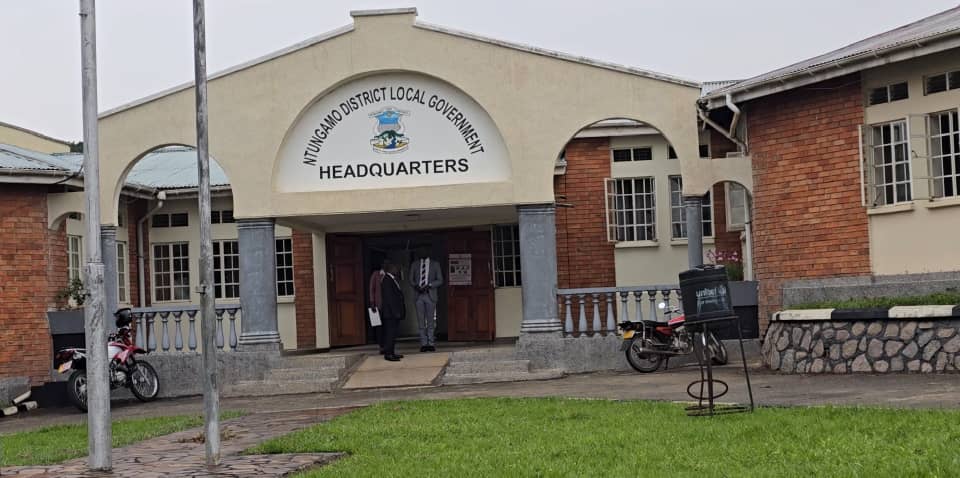
Ntungamo District Local Government is on the brink of surpassing its entire annual local revenue target within just six months, signaling a sharp turnaround in financial performance driven by tighter enforcement, early procurement, strategic infrastructure investments and a decisive crackdown on defaulting market tenderers.
Chief Administrative Officer Fildeus Kizza said the district budgeted Shs947 million in locally generated revenue for the current financial year but had already collected Shs923 million by the halfway mark.
“As a district we had a budget of local revenue of 947 million, and in the half of the financial year we collected 923 million," Kizza said.
"We are almost shooting our budget just in six months. Our revenue performance has greatly improved. I might even double it by end of this financial year."
Mr Kizza said the factors are many, singling out preparedness.
"We made sure that we start our procurement process early enough and the procurement for service providers for markets was also done on time. We have also enhanced our supervision,” he added.
The figures point to a district that has shifted from reactive administration to proactive financial management, closing loopholes that previously undermined collections and enforcing stricter contractual obligations for market operators.
Under the revised approach, service providers are required to pay two months in advance before commencing operations, a move that has significantly reduced defaults and excuses tied to alleged poor market performance.
“Previously some of the tenderers used to default, giving excuses that the market has underperformed, but this time you sign a contract and you are supposed to pay two months in advance before you go into the market and you start collecting. The default rate has been greatly reduced. That has led to increase in revenue collection,” Kizza noted.
The revenue surge follows deliberate structural reforms rolled out over the past year.
At the start of 2026, Ntungamo launched a Shs367 million infrastructure renovation project targeting key public buildings at the district headquarters, including refurbishment of the old prison structure.
District leaders said the renovations were aimed at improving service delivery while creating a more efficient environment for revenue administration.
Earlier, in November 2025, the district strengthened digital revenue systems by distributing new ICT equipment to eleven town councils.
The computers and printers, supplied by the Ministry of Local Government, were intended to address operational gaps that had undermined data management and revenue tracking at lower local government levels.
At the time, Kizza noted that several town councils were operating digital revenue systems without the necessary hardware, a mismatch that weakened accountability and efficiency.
The combination of early procurement planning, tougher contract enforcement, enhanced supervision, infrastructure upgrades and digital system support now appears to be translating into tangible revenue gains for the district.
